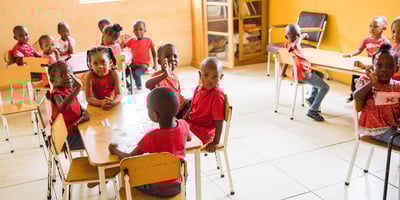

In early childhood classrooms across South Africa, teachers welcome children eager to learn, explore, and grow. But for many, hunger quietly stands in the way. An empty stomach makes it difficult to concentrate, participate, and absorb new information. Before a child can learn to read or solve a math problem, they must first have their most basic need met: nourishment.
Nutrition is not simply about food; it is about dignity, health, and opportunity. It is the foundation upon which every other pillar of development rests.
This four-part blog series unpacks Starfish Greathearts Foundation’s four pillars, education, nutrition, health care, and social welfare, and explores how each plays a critical role in shaping a child’s future. Grounded in national data and lived experience, these stories highlight why integrated support is essential for lasting impact.
The Reality of Childhood Hunger in South Africa
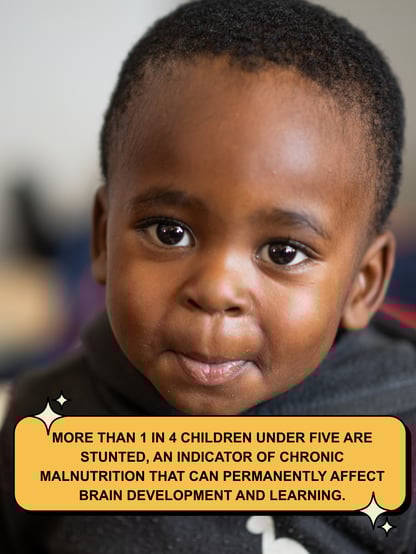
Hunger isn't just uncomfortable; it's life-threatening. Nearly two-thirds of households face food insecurity, and almost 30% of young children suffer from stunting, a form of chronic malnutrition that damages cognitive development and future earning potential. Between 2023 and 2024 alone, 1,457 children died from severe malnutrition. This is the reality South African children are facing.
There have been significant strides in improving access to education and social services, yet food insecurity and malnutrition remain persistent challenges, particularly among young children.
National data reveals the scale of the issue:
- Nearly 40% of children under six live in households that cannot meet their basic nutritional needs, placing them at heightened risk of developmental delays.
- More than 2.7 million young children live in households below the food poverty line, meaning their daily caloric intake may not meet minimum requirements.
- Chronic malnutrition, commonly measured as stunting, affects a significant proportion of children and has lasting consequences for physical growth, cognitive development, and academic achievement.
These statistics represent more than numbers; they reflect the daily realities faced by families navigating poverty, unemployment, and rising food costs. For many caregivers, ensuring consistent, nutritious meals is an ongoing struggle.
Why Nutrition Matters for Learning and Development
While many nutrition programs rely on fortified porridge and shelf-stable staples, which are cheap and easy to distribute, research shows this approach leaves critical nutritional gaps. Even with fortification, 75% of children aged 12–18 months have insufficient calcium intake. More concerning: reliance on single-staple foods fails to provide the dietary diversity that growing children need to prevent malnutrition and support cognitive development.
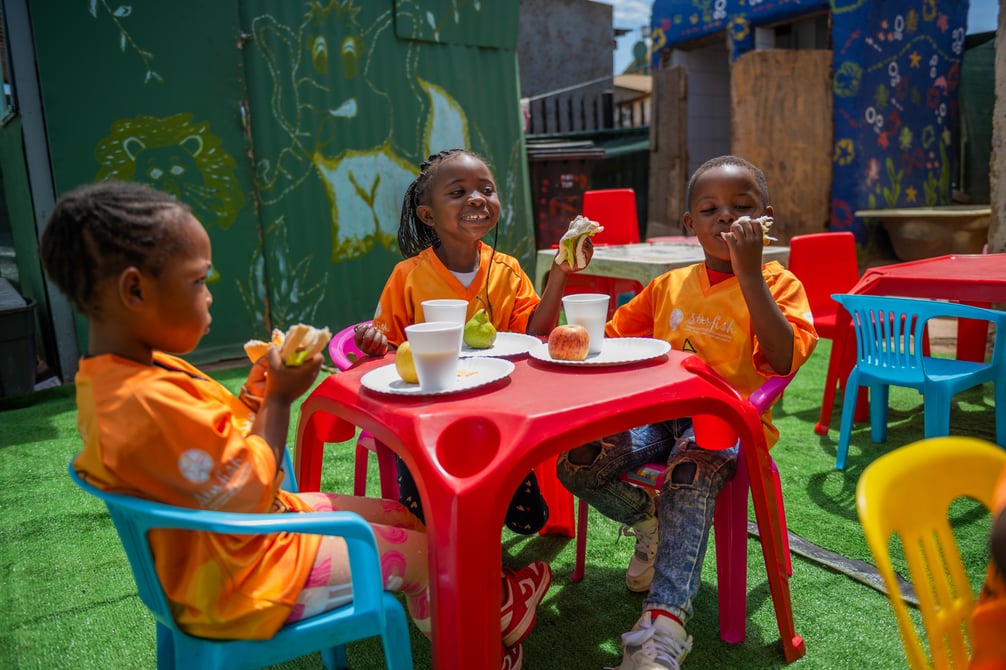
The logistics of sourcing and storing unprocessed foods are expensive and complex. That's why most programs don't do it. But we do it differently. At Starfish-supported schools, we provide children with nutritious, well-rounded meals, not just fortified porridge or shelf-stable staples.
Nutrition plays a vital role in early childhood development. During the first five years of life, a child’s brain develops at an extraordinary pace, forming neural connections that influence learning, memory, behavior, and emotional regulation. Adequate nutrition during this period is essential to support healthy brain development and overall growth.
Research consistently shows that children who experience hunger or chronic undernutrition are more likely to:
- Struggle with concentration and memory
- Experience delayed cognitive and language development
- Have weaker immune systems and increased susceptibility to illness
- Miss school due to health-related issues
- Perform poorly academically and fall behind their peers
Stunting, in particular, has long-term consequences. Children who are stunted are more likely to encounter challenges in school, have lower earning potential in adulthood, and face ongoing health concerns. These outcomes underscore a critical truth: nutrition is not just a health issue; it is an educational and economic one.
Breaking the Cycle of Poverty Through Nutrition
Hunger and poverty are deeply interconnected. Families facing economic hardship often prioritize immediate survival over long-term development, and food insecurity can perpetuate cycles of disadvantage across generations.
When children lack access to nutritious food, their ability to learn and thrive is compromised. Over time, this can lead to lower educational attainment, limited employment opportunities, and continued economic vulnerability.
Conversely, when children receive consistent, nutritious meals, the impact is profound:
- Improved school attendance and engagement
- Enhanced cognitive development and academic performance
- Better physical health and emotional well-being
- Greater resilience and long-term economic opportunity
Investing in child nutrition is one of the most effective ways to support both individual potential and national development. It is a proven strategy for reducing inequality and building stronger, healthier communities.
How Starfish Greathearts Foundation Responds
 At Starfish Greathearts Foundation, nutrition is not viewed as a standalone service but as an essential component of
holistic child development. Recognizing that children cannot learn or grow without adequate nourishment, Starfish integrates nutrition into its broader support model.
Our nutrition program isn't about filling bellies with affordable staples. It's about providing the specific nutrients children need to grow, learn, and thrive. Our balanced menus address protein, carbohydrates, healthy fats, and micronutrients, not just calories. We source fresh produce, coordinate with local suppliers, and manage inventory across multiple sites because we know that stunted children don't need just more food; they need complete nutrition.
Through partnerships with community-based organizations and early learning centers, Starfish ensures that children receive:
- Nutritious daily meals and snacks that support healthy growth and development
- Food support during vulnerable periods, including school holidays and times of crisis
- Monitoring and referrals to ensure children at risk of malnutrition receive appropriate care
- Holistic, community-centered support that strengthens families and reduces barriers to food security
This integrated approach reflects Starfish’s commitment to addressing the root causes of vulnerability while empowering local communities to provide sustainable care for children.
More Than a Meal: Restoring Dignity and Opportunity
For a child, a nutritious meal represents far more than sustenance. It is the energy to participate in class, the strength to play and explore, and the confidence that comes from knowing their needs are met. It is the difference between merely attending school and truly engaging in learning.
For caregivers, reliable access to food brings peace of mind—assurance that their children are cared for, nourished, and supported. For communities, it fosters resilience and hope.
Nutrition is, at its heart, an act of dignity. It affirms that every child deserves the opportunity to grow, learn, and thrive.
A Foundation for the Future
The connection between nutrition and education is clear: well-nourished children are better prepared to learn, succeed, and reach their full potential. By investing in child nutrition, we invest in brighter futures, stronger communities, and lasting change.
At Starfish Greathearts Foundation, nutrition is one of the four pillars that guide our work alongside education, health care, and social welfare. Together, these pillars form a holistic framework that supports children and families on their journey toward stability and opportunity.
Because when children are nourished, they don’t just survive, they thrive.
Closing Call to Action
Join us in ensuring that no child has to learn on an empty stomach. Your support helps provide nutritious meals, strengthen families, and create pathways to brighter futures.
-
South African Early Childhood Review 2024, Children's Institute, Ilifa Labantwana, Department of Basic Education.
-
Thrive by Five Index 2024: National Findings, Department of Basic Education & DataDrive2030.
-
Food Insecurity in South Africa: Evidence and Implications, Human Sciences Research Council (HSRC).
-
Contribution of Commercial Infant Products and Fortified Staple Foods to Nutrient Intake in Young Children, National Center for Biotechnology Information (NCBI).
-
Transforming South Africa's School Nutrition Program: Challenges and Solutions for Enhanced Child Development, PMC National Center for Biotechnology Information.
-
Deaths from Severe Acute Malnutrition in South Africa (2023-2024), Democratic Alliance.
More about the author:
Born in South Africa, Marlize Adair brings both professional expertise and a deep personal commitment to uplifting young children and families. She holds a Master of Business Administration (MBA), an Advanced Certified Nonprofit Professional (ACNP) credential, and a bachelor’s degree in Early Childhood and Family Studies, which grounds her work in child development, social-emotional learning, and nonprofit strategy.
At Starfish Greathearts Foundation, Marlize is the Director of Philanthropy and Communications and partners closely with the chapter CEO to lead philanthropy, donor engagement, and communications, connecting supporters to the life-changing impact of education, nutrition, and healthcare programs across South Africa. Marlize moved to the United States in 2004 and now lives in Seattle with her husband, Ian, and their son, Noah, while her extended family remains in South Africa.
.jpg?height=200&name=SGF%20Marketing%20Assets-189%20(1).jpg)