.png?width=1024&name=image%20(1).png "image (1)")
Over the past quarter, Starfish has continued to deliver essential healthcare, and empower people to provide professional and sustainable services to orphaned and vulnerable children. Our centres work with local community partners, identifying need, and providing education, nutrition, and healthcare programmes to thousands of vulnerable people across seven provinces. We would like to take this opportunity to thank you for your generous contribution and are delighted to share with you the life-changing work your support has made possible.
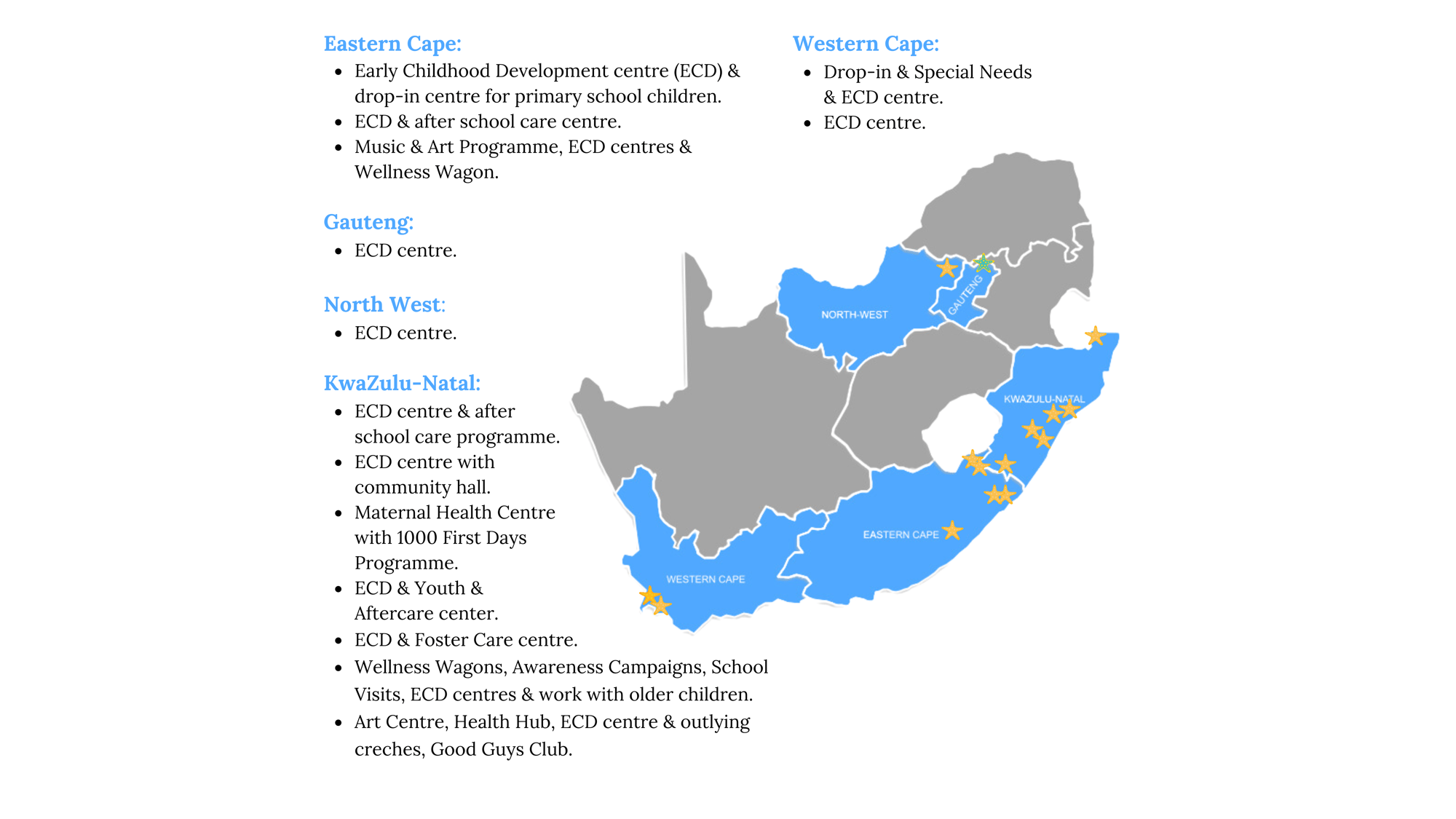
Thanks to your help, our static clinic in KZN has made a huge difference in the last quarter!
.jpg?width=750&height=563&name=Wellness-Wagon%20(1).jpg "Wellness-Wagon (1)")
We have enjoyed many successes over this quarter: notably, one community partner received a Certificate and Award of Excellence at the 2026 Mayoral Excellence Awards, naming our partner as one of the most active organisations involved in community development within the municipality. In addition, we hosted the Department of Health in February at our ECD centre, where they provided vital services including deworming and immunisations to all 61 children enrolled in 2026.
.png?width=1856&height=1248&name=image%20(2).png "image (2)")
The Wellness Wagon nurse recently conducted a home visit to provide follow-up support and care to one of the families in need. Through these visits, the nurse ensures that families receive essential health guidance, medical checks, and encouragement to maintain their well-being. These personal visits strengthen the connection between the community and our healthcare services, bringing care and compassion directly to their doorstep.
Thanks to your help, the wellness wagons have made a huge difference! In just the last quarter:
Alongside our regular health regime, we have recently introduced a new initiative after noticing that many children visiting our Wellness Wagons suffered from poor oral health. Our Oral Health Campaign, which is administered through our partnership with Sasol, has helped to improve the oral health of over 8000 children in and around Sasolburg. Several thousand oral health packs have been distributed to children, partnered with oral health education clinics and hands-on-demos that taught children how to look after their teeth.
Mnelisi is a 4-year-old boy, who lives with his single, unemployed mother and six siblings. Both he and his mother are HIV-positive, but out of fear of judgement and prejudice, his mother wasn't taking her treatment regularly. This mean that Mnelisi wasn't receiving his either. As a result, Mnelisi was hospitalised. Our team was made aware of this case and acted quickly, beginning regular home visits and educating his mother about how important their treatment was. Today, they both follow their treatment guidelines, and his mother is more receptive to support.
Our maternal health programme provides support, resources, and group sessions to families. In response to the HIV crisis, which poses significant risks during pregnancy, we work alongside local clinics and have implemented the First 1,000 days programme, taking care of both mother and child in the first 1,000 days of a child’s life.
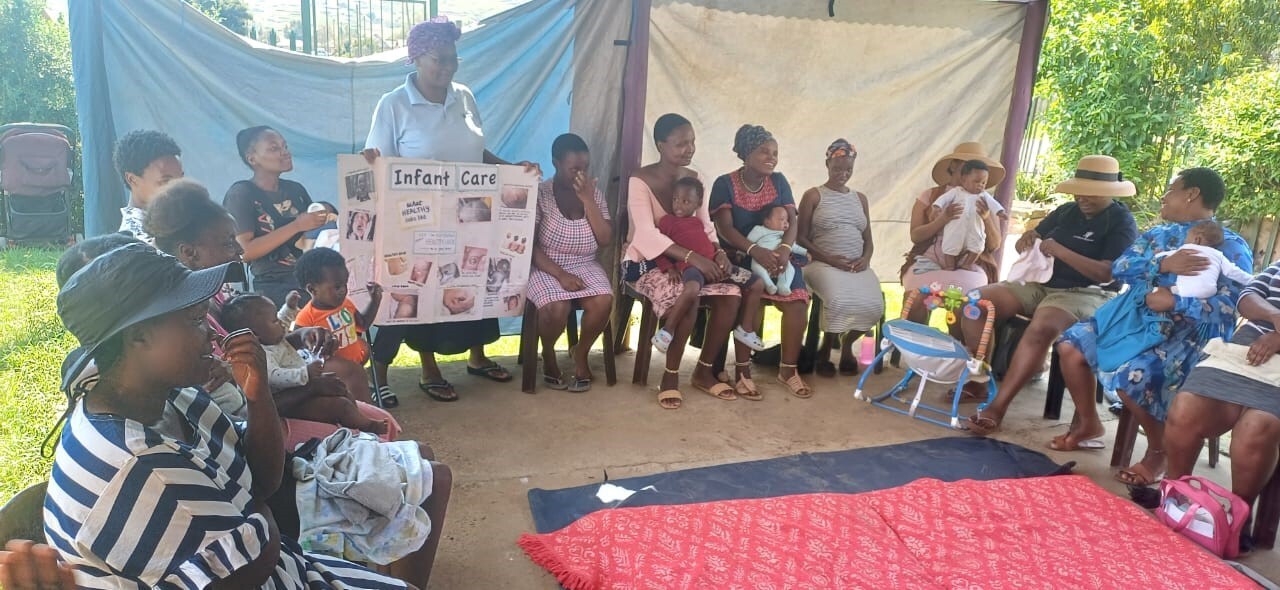
Across this past quarter:
Amahle is a 17-year-old student raised by her single mother in poverty. When she became pregnant, she was overwhelmed and uncertain over what her future held. She came to our Ethembeni centre, where she attended antenatal classes, and we helped her to obtain identity documentation, and subsequently a birth certificate, which was crucial in obtaining a child support grant for her child. The centre continues to provide Amahle with support, which has helped her to feel more comfortable in her role as a mother, and in the future.
Our ECD centres provide free meals and snacks to many of the young children who attend sessions. These meals are nutritious, and contain fresh fruit and vegetables. For many of the children who attend, this is their own meal of the day, and our staff are trained to monitor them for signs of malnutrition, alongside other mental and physical ailments. Our work in preventing stunted development has the potential to be life-changing, and this is all thanks to your donations. In this quarter alone, we have provided 67,990 meals to children who need them the most.
/(Global)%20Media/Photos/SGF-108.jpg?width=2000&height=1334&name=SGF-108.jpg "SGF-108")
Mandla's story
Mandla is a 4-year-old boy, whose parents cannot afford to provide adequate meals. Our ECDs manage community gardens, which allows locals to plant and grow their own vegetables. Mandla saw one of his neighbours tending to the garden, and went to ask for help. He has just grown his first tomatoes, and is very proud!
Education
Our ECD centres also help to kickstart the children's education, and encourage proficiency in reading, numeracy, and creativity. This includes special-needs support, such as speech and physical therapy. For the children who are behind in their education, individualised learning plans are designed by their teachers.
This quarter, we celebrated the official opening of the new crèche building. Since it was opened, enrolment has more than doubled, with 31 children now attending, as parents and guardians trust a safe, well-equipped, and vitally, welcoming space for their little ones to learn and play.
For the past four years, many boys in our community have been asking to join the boys programme, 'The Good Guys Club', but due to limited funding, not everyone could be included. Thanks to our generous donors, we have now expanded the capacity to 50 children. This has given more boys a chance to learn and grow together with their peers.
Over the past quarter, one of our partners collaborated with another local youth programme to have 30 young people placed across our ECDs. This has provided young people with a chance to gain key skills and experience, and has helped our organisations in their day-to-day operations.
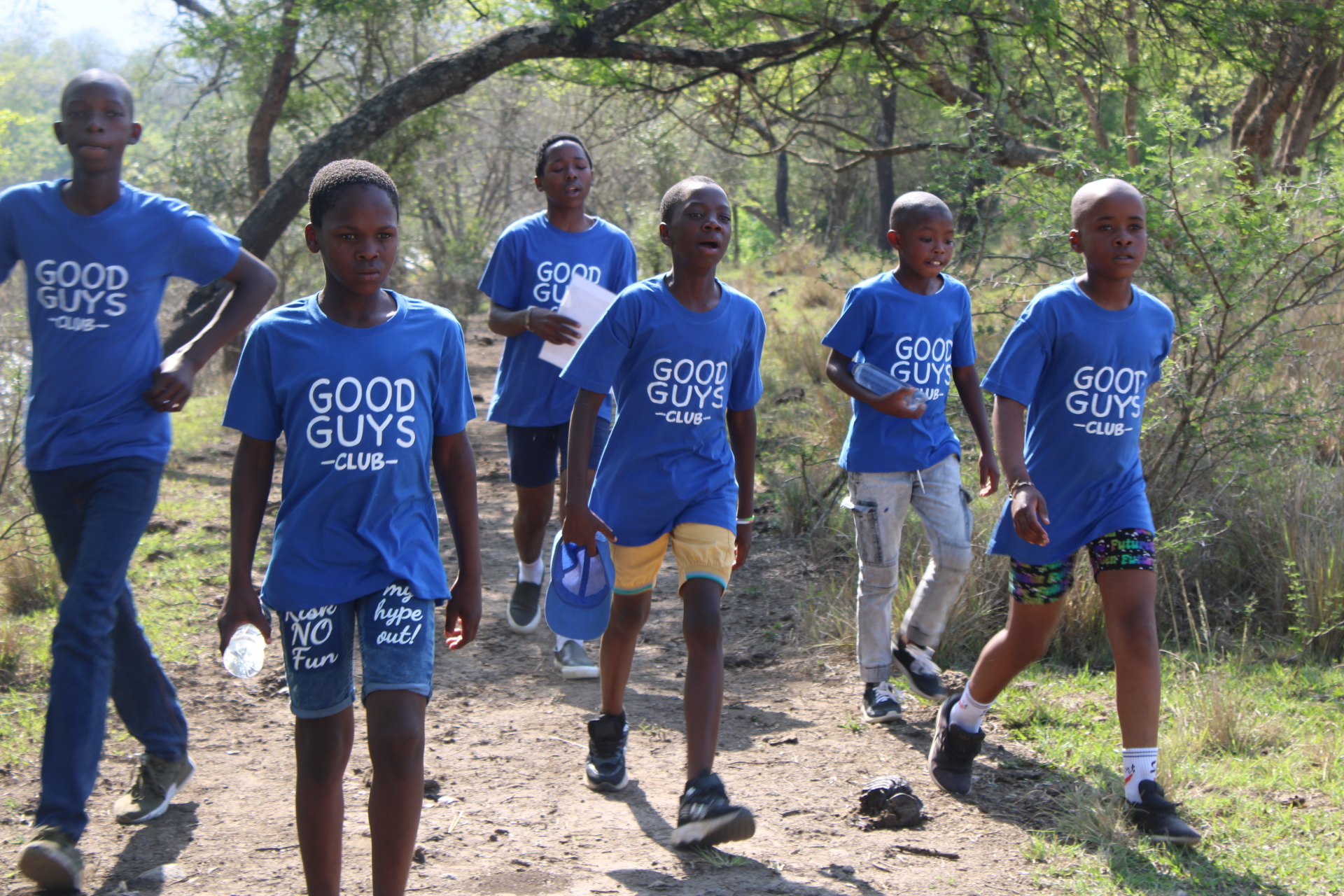
Opportunities to learn and collaborate
One of our main initiatives in education has been around a discussion on gender based violence prevention (GBV). One of our teams recently participated in the Masibambisane Inception Workshop organised by the Foundation for Human Rights in Johannesburg. The workshop brought together 25 organisations that will be part of the Masibambisane initiative, a whole-community approach to addressing GBV. The Masibambisane approach recognises that addressing GBV requires collaboration between community organisations, service providers, local leaders and other stakeholders to foster safer and more supportive communities.
Alongside this initiative, our partnerships continue to grow. In May, the local municipality donated furniture to two crèches in the Ufafa area. Ackermans also donated children's clothing, while the Industrial Development Corporation and ABSA bank donated office furniture to support day-to-day operations
We extend our heartfelt gratitude for your invaluable support, and hope you can see the significant impact your collective donations have had on vulnerable communities in South Africa.
.png?width=274&height=90&name=Annotation%202023-06-30%20144756%20(2).png)