|
Healthcare
Healthcare That Reaches Children and Families
Starfish-supported healthcare programs bring essential services closer to children and families through mobile healthcare, preventative care, maternal health services, screenings, oral healthcare, treatment, and referrals.
|
|
Community Wellness Program
Wellness Wagons
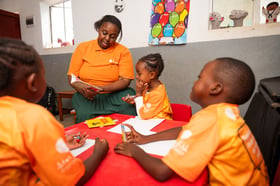
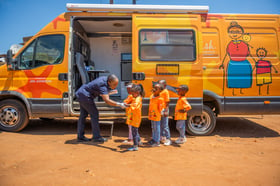
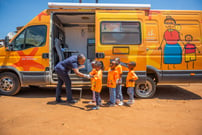
Our Wellness Wagons bring mobile healthcare directly into underserved communities, providing children and families with screenings, preventative care, treatment, health education, referrals, and follow-up support.
|
|
🇺🇸.jpg?width=280&height=220&name=Wellness-Wagon%20(1).jpg) |
Jim Johnson Wagon
Mobile Healthcare
Provides screenings, preventative care, treatment, health education, referrals, and follow-up support.
About 3.9 million South African children have had to walk more than 30 minutes to reach the health facility. In some very remote areas, children have to walk hours just to see a doctor.
|
🇬🇧/(Global)%20Media/Photos/Feed%20(12).png?width=280&height=220&name=Feed%20(12).png) |
Zisize Wellness Wagon 1
Mobile Healthcare
Delivers mobile healthcare directly into communities with screenings, preventative care, referrals, and follow-up support.
KwaZulu-Natal’s human immunodeficiency virus prevalence was 16.0% in 2022—the second highest provincial rate in South Africa.
|
|
|
🇬🇧/(ZA)%20Media/(ZA)%20Photos/Screenshot%202025-03-25%20at%2009.30.54.png?width=280&height=220&name=Screenshot%202025-03-25%20at%2009.30.54.png) |
Zisize Wellness Wagon 2
Mobile Healthcare
Brings primary and preventative healthcare directly into underserved communities.
KwaZulu-Natal had an estimated 1.98 million people living with human immunodeficiency virus (HIV) in 2022.
|
🇺🇸NEW.jpg?width=280&height=220&name=SGF-163%20(1).jpg) |
Wellness Wagon
Mobile Healthcare
Helps children and families receive essential healthcare closer to home.
Air pollution was linked to approximately 3,365 deaths of children under five in South Africa in 2021.
|
|
|
Additional Healthcare Programs
|
🇬🇧-1.png?width=280&height=220&name=Untitled%20design%20(3)-1.png) |
Healthy Beginnings Program
Maternal Health
|
360
Women supported — Q1 2026
|
|
|
290
Children supported — Q1 2026
|
|
Provides maternal healthcare and support during pregnancy and the early stages of a child's life.
KwaZulu-Natal recorded 26,515 pregnancies among girls aged 10–19 in just nine months; 1,254 were girls aged 10–14.
|
 |
Sasol Oral Health Program
Dental Care
|
45,000
Reaching children in Sasolburg, Secunda, Ekandustria, and uMkomati
|
Provides oral-health education, dental screenings, preventative care, oral-hygiene supplies, and referrals when further treatment is needed.
The World Health Organization estimates that 41% of South African children aged 1–9 have untreated decay in their baby teeth.
|
 |
Sanitary Items for Girls
Menstrual Health & Dignity
Provides sanitary pads to school-aged girls who may not otherwise have reliable access to menstrual-hygiene supplies. By making these essentials available through Starfish-supported programs, girls can manage their periods with greater dignity and confidence, reducing a practical barrier that can disrupt classroom participation, daily routines, and consistent school attendance.
A 2026 Parliamentary colloquium heard that 83% of girl learners lack consistent access to menstrual hygiene products and one in four misses school each month because of it.
|
|
|
 |
Partnership with
Save the Children
Child Safeguarding
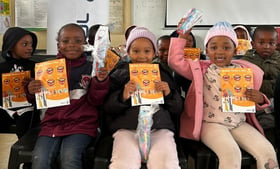
Through a six-month partnership with Save the Children South Africa, Starfish is strengthening child safeguarding systems across its staff and partner network through audits, policy and reporting improvements, screening, and safeguarding training. The partnership is designed to embed consistent safeguarding practices and support Starfish toward Bronze Child Safeguarding Accreditation.
42% of South African children have experienced some form of maltreatment by an adult who was supposed to care for them.
|
 |
Cardiopulmonary Resuscitation Training for Teachers
Emergency Preparedness
Each Starfish-supported school will have at least one teacher or staff member certified in cardiopulmonary resuscitation, so someone on site is prepared to respond during a medical emergency. The training gives educators practical lifesaving skills, greater confidence in an emergency, and clear steps to take while professional medical assistance is being reached.
South Africa records more than 1,500 drowning deaths a year—nearly one-third involve children under 14.
|
|
|
|
|
|

/(Global)%20Media/Photos/Screenshot%202025-01-08%20at%2009-44-14-1.png?width=210&height=135&name=Screenshot%202025-01-08%20at%2009-44-14-1.png)
/(Global)%20Media/Photos/Screenshot%202025-01-08%20at%2009-44-14-1.png?width=280&height=220&name=Screenshot%202025-01-08%20at%2009-44-14-1.png)
.jpg?width=280&height=220&name=SGF%20Marketing%20Assets-189%20(1).jpg)
/(Global)%20Media/Photos/Feed%20(9).png?width=280&height=220&name=Feed%20(9).png)
.jpeg?width=280&height=220&name=SGF%20Marketing%20Assets-74%20(2).jpeg)
/(ZA)%20Media/(ZA)%20Photos/Copy%20of%20Untitled%20(1).png?width=280&height=220&name=Copy%20of%20Untitled%20(1).png)
/(Global)%20Media/Photos/Screenshot%202024-12-05%20at%2014.07.05-2.png?width=280&height=220&name=Screenshot%202024-12-05%20at%2014.07.05-2.png)
.jpeg?width=280&height=220&name=Copy%20of%20SGF%20Marketing%20Assets-42%20(1).jpeg)
/(Global)%20Media/Photos/Educate-Wide%20(1).jpg?width=280&height=220&name=Educate-Wide%20(1).jpg)
/(Global)%20Media/Photos/SGF-79.jpg?width=280&height=220&name=SGF-79.jpg)
/(US)%20Social%20Media/Copy%20of%20SGF-151.jpg?width=280&height=220&name=Copy%20of%20SGF-151.jpg)
-1.jpeg?width=280&height=220&name=WhatsApp%20Image%202026-05-26%20at%2018-00-42%20(9)-1.jpeg)
/(Global)%20Media/Photos/SGF-23.jpg?width=280&height=220&name=SGF-23.jpg)
/(Global)%20Media/Photos/Screenshot%202025-02-13%20at%2014.52.11.png?width=280&height=220&name=Screenshot%202025-02-13%20at%2014.52.11.png)
/(Global)%20Media/Photos/SGF-85.jpeg?width=280&height=220&name=SGF-85.jpeg)
/(Global)%20Media/Photos/Nourish%202.png?width=280&height=220&name=Nourish%202.png)
-1.jpeg?width=280&height=220&name=SGF%20Marketing%20Assets-214%20(2)-1.jpeg)
/(Global)%20Media/Photos/SGF-108-1.jpg?width=280&height=220&name=SGF-108-1.jpg)
/(ZA)%20Media/(ZA)%20Photos%20-%20Whatsapp/WhatsApp%20Image%202023-11-17%20at%2014-13-29.jpeg?width=280&height=220&name=WhatsApp%20Image%202023-11-17%20at%2014-13-29.jpeg)
/(Global)%20Media/Photos/Placeholder%20image%20(4)-1.png?width=280&height=220&name=Placeholder%20image%20(4)-1.png)
/(Global)%20Website/Photos%20-%20Website/Screenshot%202023-10-18%20at%2013-12-52.png?width=280&height=220&name=Screenshot%202023-10-18%20at%2013-12-52.png)
-1.png?width=280&height=220&name=Untitled%20design%20(4)-1.png)


/(Global)%20Media/Photos/seal-of-transparency.jpg?width=618&height=596&name=seal-of-transparency.jpg)
.png?width=845&height=782&name=effectiveNonprofit-large%20(1).png)
.png?width=845&height=782&name=topRanked-large%20(1).png)
.png?width=845&height=782&name=siteVisitVerified-large%20(1).png)
.png?width=845&height=782&name=vetted-large%20(1).png)
/(Global)%20Accreditation%20Badges/Screenshot%202024-08-30%20at%2000.02.25.png?width=314&height=118&name=Screenshot%202024-08-30%20at%2000.02.25.png)
 Send me good news

.png?width=409&height=177&name=download%20(2).png)



/(Global)%20Website/9-1.png)
/(Global)%20Website/8-1.png)



.png)